
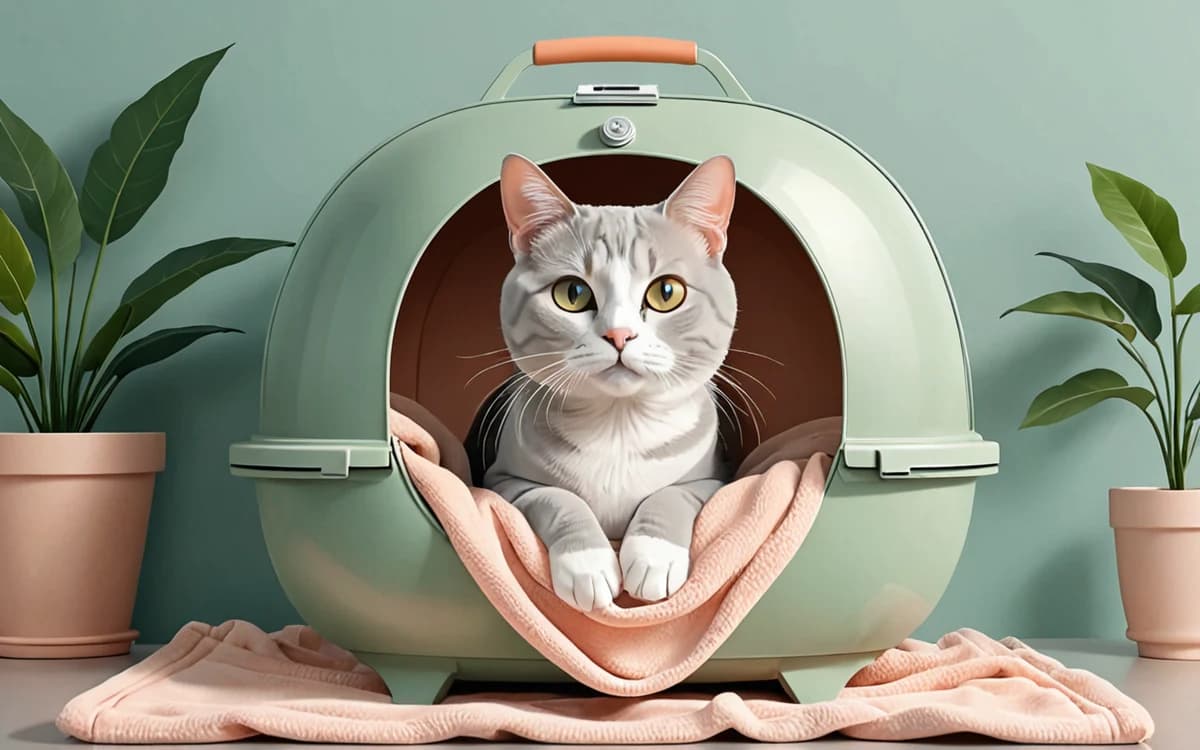
Vet visits rank among the most stressful events in a cat's life, but most of that stress is preventable with preparation. The carrier is usually the biggest trigger, so leaving it out as a normal piece of furniture, covering it during the car ride, and keeping your cat elevated and away from dogs in the waiting room make the biggest difference.
Quick checklist:
- Leave the carrier out permanently so it stops meaning "something bad is about to happen"
- Cover the carrier with an opaque cloth for the car ride and drive gently
- Keep the carrier elevated on your lap or a chair in the waiting room, away from dogs
- Give your cat quiet, undisturbed time to recover once you're home
- Ask your vet about a low-stress or "cat-friendly" appointment slot if one is offered
Why vet visits are so hard on cats
Cats are territorial animals, and a vet visit stacks several stressors that all violate that need for control at once: an unfamiliar carrier, a car (an environment with no escape route), strange smells, other animals, and being handled by a stranger. According to International Cat Care, a UK-based feline welfare charity, much of this stress can be reduced simply by changing how the carrier is introduced and how the journey itself is managed — the appointment is often the least stressful part once the run-up is handled well.
Before the visit: make the carrier boring
The single most effective change is timing. If the carrier only appears right before a stressful trip, your cat learns to associate it with exactly that. Instead:
- Leave the carrier out in a room your cat already uses, with the door open, weeks before you need it — not just the day before an appointment
- Put a soft blanket or an item of clothing that smells like home inside it
- Drop treats near, then just inside, then deep inside the carrier over several days so walking in becomes a normal, rewarding choice
- Feed a meal or offer a favorite treat inside the carrier occasionally, so it becomes linked with something good rather than something to fear
For cats who are already carrier-averse, this habituation can take a couple of weeks. That's a normal timeline, not a sign it isn't working — cats need repeated, low-pressure exposure before a space feels safe. Our guide to calming a stressed cat covers the same principle of gradual, positive exposure in more detail.
The car ride: cover the carrier and drive smoothly
Once your cat is in the carrier, the car itself becomes the next stress point. A few adjustments help:
- Drape an opaque cover — a towel or blanket works fine — over the carrier, leaving ventilation open. Reducing visual stimulation (passing cars, strangers, movement) noticeably lowers stress for most cats
- Secure the carrier so it doesn't slide on the seat, and accelerate and brake as gently as you can
- Keep the car reasonably quiet — turn the radio down rather than up
- If the drive is longer than 10–15 minutes, consider a short stop to check your cat is settled, without opening the carrier unnecessarily
Playing calming music during the car ride can take the edge off for many cats — see our guide to calming music for cats for what actually helps. The Calm Cat app includes a sound library you can start before you leave the house and let run quietly during the drive.
For cats who struggle with car travel specifically, even outside of vet trips, our full guide to cat anxiety in the car goes deeper into desensitizing your cat to the car itself.
The waiting room: elevate, cover, and keep distance
Waiting rooms mix unfamiliar smells, other stressed animals, and often barking dogs — a lot for a cat who is already on edge. A few small habits go a long way:
- Keep the carrier on your lap or on a chair rather than on the floor; cats feel safer above eye level with unfamiliar dogs
- Keep the cover on the carrier while you wait, only removing it once you're in the exam room
- Ask if you can wait in the car (weather permitting) or in a separate area, and be called in directly, if the clinic offers that option
- Avoid letting other people, especially strangers or excited children, reach into or peer closely at the carrier
After the visit: let recovery happen on its own timeline
The stress doesn't end the moment you leave the clinic. Cats often carry residual anxiety for hours, sometimes into the next day, and may act differently than usual.
- Bring your cat home and open the carrier in a quiet room, letting them come out when ready rather than tipping or pulling them out
- Skip the greeting party — resist the urge to pick them up, cuddle them, or introduce them to visitors right away
- In multi-cat households, some cats react to the "vet smell" on a returning cat with hissing or avoidance; keeping them separated for a few hours until the smell fades can prevent an unnecessary scuffle
- Offer food and water as normal, but don't be alarmed by a skipped meal — appetite often returns within a few hours
A quick reference: what to do at each stage
| Stage | What helps most |
|---|---|
| Before | Carrier left out permanently, treats and bedding inside, no last-minute appearance |
| Car ride | Opaque cover on the carrier, gentle driving, calming music playing softly |
| Waiting room | Carrier elevated and covered, kept away from dogs, minimal handling by strangers |
| After | Quiet room to decompress, no forced interaction, separate cats if needed |
Try calming music with Calm Cat
Free download — iOS & Android, 5 languages.


Common mistakes that make vet visits harder
Bringing out the carrier only on appointment day. This is the single biggest driver of carrier dread — it turns a piece of furniture into a warning sign. Keep it out year-round.
Chasing your cat around the house to get them in. A stressful capture right before the trip undoes any calming preparation you've done. If your cat isn't cooperating on the day, a food lure into the carrier works far better than a chase.
Skipping the cover on the carrier. An open carrier exposes your cat to every passing dog, stranger, and unfamiliar sight in the clinic — small effort, large payoff.
Rushing the reunion at home. Forcing affection on a cat who is still winding down from a stressful outing usually backfires. Let them set the pace once you're home.
When extra help is worth considering
If your cat's stress around vet visits is severe — heavy panting, drooling, complete freezing, or aggression that makes visits genuinely difficult — mention it to your vet directly. Some clinics offer pre-visit anti-anxiety medication, low-stress handling techniques, or "fear free" certified staff trained specifically for anxious patients. This is a conversation worth having before the next appointment, not something to just push through each time.
Frequently asked questions
How far in advance should I start carrier training? Two to three weeks is a reasonable target if your cat is carrier-averse, though even a few days of leaving it out with treats inside is better than none. If you have advance notice of an appointment, start as early as you can.
Is it okay to sedate my cat for a vet visit? Only under veterinary guidance — never give your cat any medication, including over-the-counter options, without your vet's approval first. If stress is severe, ask your vet directly about safe options for your specific cat.
Do these tips replace the need for regular vet visits? No. These steps make visits easier on your cat, but they don't reduce how important the visits themselves are — regular veterinary care remains essential for catching health issues early. If you're ever unsure whether a symptom is stress-related or something more, our guide to telling stress apart from illness can help you decide whether it's time to call the vet.