
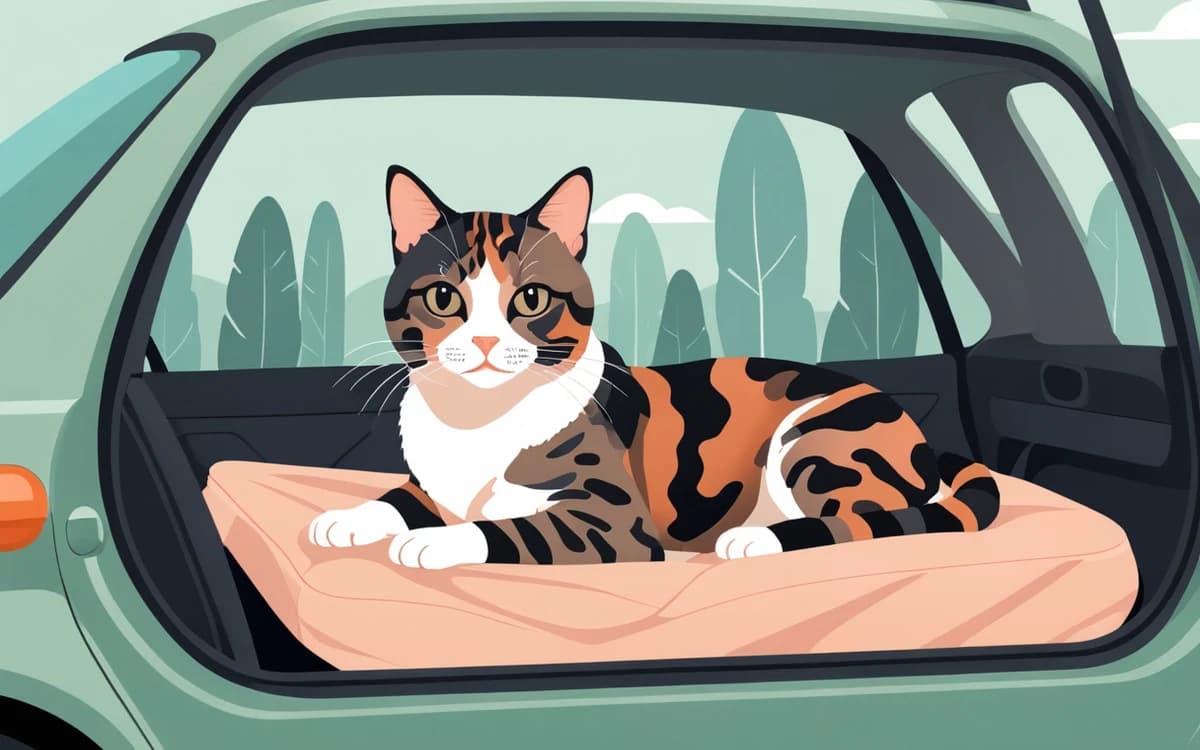
Cats get anxious in the car because they lose control over their territory and can't predict the motion, noise, or smells around them. The fix is gradual: build tolerance with short practice trips before a long one, secure the carrier properly, manage temperature and feeding, and use calming sounds during the ride itself.
Quick checklist:
- Run several short "practice" drives before a long journey
- Always secure the carrier — never let your cat loose in the car
- Keep the cabin cool and ventilated, but avoid pointing the AC directly at the carrier
- Skip a large meal in the hours before travel to reduce nausea
- Play calming sounds during the ride, not just once you arrive
Why cars are so stressful for cats
Cats manage stress by controlling their environment — choosing where to hide, what to approach, and how much distance to keep from something unfamiliar. A moving car removes all of that at once. The floor shifts under them unpredictably, the engine hums and vibrates, other traffic creates sudden noise, and the whole cabin smells different from home. Because a cat can't retreat, assess the situation from a safe distance, or leave when it wants to, the instinctive response is often to freeze, flatten against the carrier floor, or vocalize.
This is different from a dog's relationship with cars, which is usually shaped early and reinforced by trips to fun places. Most cats only experience a car when something stressful is about to happen — a vet visit, a move — so the car itself becomes a trigger before the destination ever does. Separating the car from the stressful event is the core idea behind everything below.
Build tolerance with short trips first
If your cat has never traveled calmly, don't start with a two-hour drive. Begin with the carrier itself: leave it out in a room your cat already likes, with a blanket or piece of clothing that smells familiar inside, so it stops reading as a trap that only appears before something bad happens.
Once your cat will walk into the carrier on her own, move to short car sessions — sit in the parked car with her in the secured carrier for a few minutes, then go back inside. The next step is a five-minute drive around the block, ending back at home, ideally paired with a treat or a calm ten minutes once you're back. Repeat this two or three times over a week or two before attempting anything longer. Each short trip that ends uneventfully teaches your cat that the car doesn't automatically predict something frightening. Jotting down how each trip went — length, reaction, how fast she settled afterward — makes the progress easier to see; our guide to tracking cat stress and behavior covers a simple way to do this.
Secure the carrier — never let your cat ride loose
A cat loose in a moving car is a safety risk for everyone, not just a comfort issue. A startled cat can end up under the pedals, behind the driver's seat, or clawing at a window, which is dangerous for the driver and terrifying for the cat. The carrier should be strapped in with a seatbelt or wedged securely in the footwell so it can't slide or tip during braking and turns.
Choose a carrier your cat already associates with safety rather than introducing a new one on travel day. Hard-sided carriers with a front and top opening make loading easier and give you access if you need to check on her mid-trip. Covering three sides with a light towel reduces visual stimulation from passing scenery and other cars, which for many cats is a meaningful part of the stress.
Manage the temperature
A parked car heats up fast, even with the windows cracked, and a carrier restricts airflow further. Never leave your cat alone in a stationary car, even for a few minutes, in warm weather. While driving, keep the cabin at a comfortable, moderate temperature and avoid aiming an air vent directly at the carrier — a cold draft is its own source of discomfort on top of the stress she's already managing.
Time meals carefully
Motion sickness is common in cats that aren't used to car travel, and a full stomach makes nausea and vomiting more likely. Avoid a large meal in the two to three hours before departure; a small snack is usually fine. Make sure your cat has had access to water beforehand, and offer some again once you've arrived and she's settled, rather than trying to get her to drink mid-journey.
Use calming music during the ride
Calming music for cats can be genuinely useful in the car specifically because it gives your cat one predictable, familiar sound to focus on instead of the shifting engine noise and traffic outside. Calm Cat's sound library is built for exactly this kind of situational use — play a track from the moment you start the engine so it's already familiar background by the time the car moves. See our full guide to calming music for cats for what the research actually supports.
Start the music before you pull out of the driveway rather than partway through the trip — introducing a new sound once your cat is already anxious is less effective than having it present from the calm starting point.
| Stage | What to do |
|---|---|
| Before the trip | Practice short drives first, skip a big meal, secure the carrier with a familiar blanket inside |
| During the trip | Keep the carrier strapped in, cabin cool, calming music playing, avoid opening the carrier mid-drive |
| On arrival | Let her settle in the carrier for a minute before opening it, offer water, keep the first hour low-key |
Try calming music with Calm Cat
Free download — iOS & Android, 5 languages.


Signs your cat is struggling in the car
A little tension — a lowered body, dilated pupils, occasional meowing — is normal for a cat who hasn't fully adjusted yet. Watch more closely for signs that suggest real distress rather than mild discomfort: heavy panting (unusual in cats and worth taking seriously), excessive drooling, repeated attempts to claw or squeeze out of the carrier, or constant, escalating vocalization that doesn't settle after the first few minutes.
If you see these signs, pull over safely when you can and check that the carrier is secure and the temperature is comfortable rather than opening it in a moving car. A cat who reacts this strongly on every trip, despite gradual practice and a secured, familiar carrier, is a reasonable case to discuss with a vet — some cats benefit from short-term anti-nausea or anti-anxiety medication for travel days, and a vet can also rule out that discomfort is coming from something physical rather than purely behavioral — see our guide on telling stress apart from illness for the red flags worth watching for. Our guide to reducing cat stress at vet visits covers carrier training in more depth if the vet trip itself is part of what you're preparing for.
Frequently asked questions
How many practice trips does my cat actually need? It varies a lot by cat. Some settle after two or three short drives; others need several weeks of very short sessions before a longer trip feels manageable. Go at the pace where each trip ends calmly rather than rushing toward a deadline.
My cat still cries the whole ride even after practice — what now? Some vocalization during travel is common even in cats who otherwise tolerate the car reasonably well, and on its own it isn't necessarily a red flag. Combine the environmental basics from our guide to calming a stressed cat — a secure, covered carrier and calming music — with shorter, more frequent practice trips. If the crying comes with panting, drooling, or she refuses to eat or drink normally around travel days, it's worth a conversation with your vet about whether anti-anxiety support makes sense for your cat specifically.
Is it ever okay to let my cat out of the carrier during a long drive? No — even a calm cat can panic at a sudden noise or a stop, and a loose cat in a moving car is dangerous for everyone involved. If you need a longer break, pull over completely, park safely, and only then consider opening the carrier in a controlled way. This isn't medical advice; if your cat shows ongoing severe distress during travel, a vet visit is the right next step to rule out other causes and discuss options.