
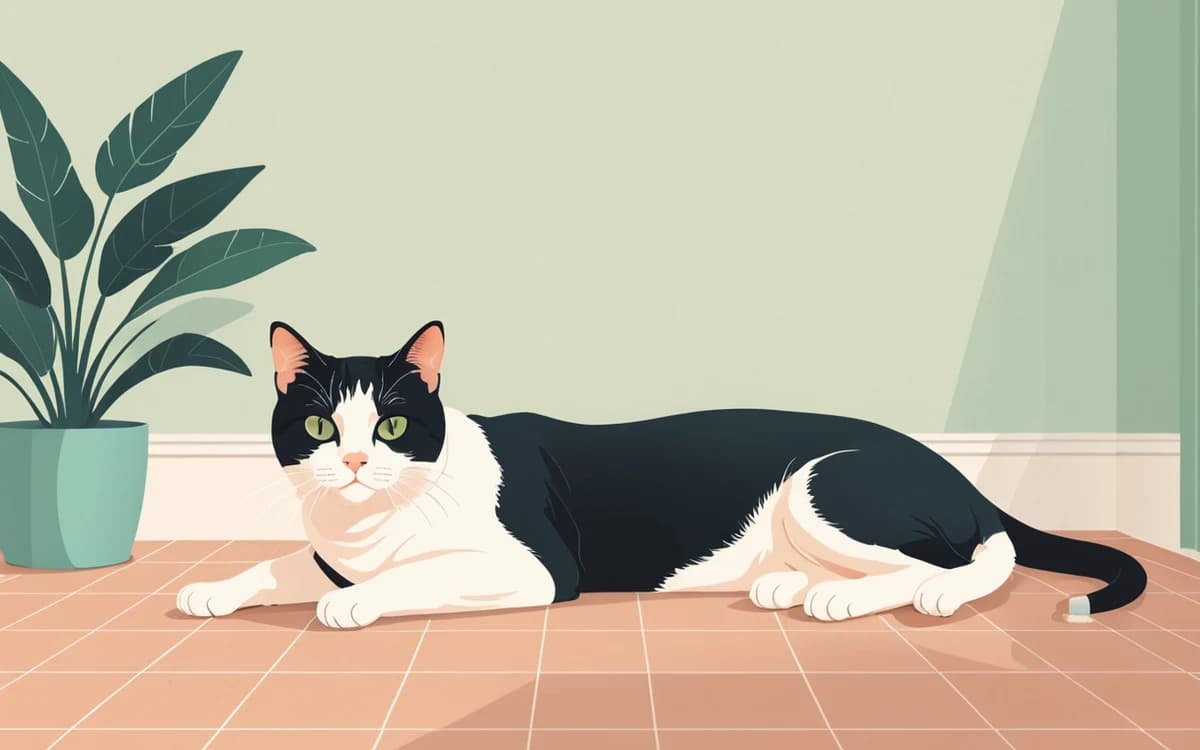
Synthetic cat pheromones — sold as diffusers, sprays, and collars — are designed to mimic the natural facial pheromone cats leave when they rub against furniture, doorways, or people. Manufacturers market them as a calming signal that tells a cat "this space is safe." The evidence is genuinely mixed: some studies report a modest calming effect, others find no meaningful difference from a placebo, so treat these products as one supporting tool rather than a guaranteed fix.
Quick checklist:
- Synthetic pheromones copy the "cheek pheromone" cats deposit when they rub against objects and people
- Diffusers, sprays, and collars are built for different situations — a room, an object or carrier, or on-the-go use
- Scientific evidence is mixed: some trials show a mild reduction in stress-related behaviors, others show no real advantage over placebo
- They work best as one part of a broader plan — routine, environment, and calming sound matter just as much
- Severe or long-standing anxiety needs a vet or veterinary behaviorist, not a diffuser alone
What synthetic cat pheromones actually are
Cats have scent glands around their face, and they deposit pheromones from these glands when they rub their cheeks against furniture, doorframes, or the people they trust. This "cheek-rubbing" behavior is thought to mark familiar objects and spaces as safe. Synthetic versions of this facial pheromone (sometimes labeled an "F3 fraction" analog on packaging) are manufactured and sold in diffuser, spray, and collar form, on the idea that exposing a cat to it artificially can produce a similar sense of familiarity and calm.
It's worth being precise about what this is not: it isn't a sedative, it doesn't contain any drug, and it's a different chemical signal from the alarm pheromones cats release when frightened. It's a copy of an "everything is fine here" signal, not a chemical that forces relaxation.
What manufacturers promise, and what the research actually shows
Product marketing for pheromone diffusers and sprays tends to promise fairly broad benefits: less scratching, less spraying or marking, easier introductions between cats, calmer car rides, smoother vet visits. Some of these claims trace back to manufacturer-funded studies that did find a measurable reduction in specific behaviors in specific contexts, particularly around urine marking and scratching.
Independent research paints a less consistent picture. Several controlled trials — including some looking at car travel and veterinary settings — found no statistically significant difference between cats exposed to synthetic pheromones and cats exposed to a placebo diffuser. Reviews of the overall evidence base tend to describe results as inconsistent rather than settled, which is a fair summary: this isn't a technology with strong scientific consensus behind it, and any product promising a dramatic transformation is overselling what the current evidence supports.
That doesn't mean pheromone products are useless — plenty of owners report a real difference for their own cat, and a low-risk, non-sedating product is a reasonable thing to try. It just means going in with realistic expectations, and not treating a diffuser as a substitute for the things that reliably help. See our guide to calming a stressed cat for what tends to make the biggest difference.
Diffuser vs. spray vs. collar: matching the format to the situation
The three formats aren't interchangeable — each is built for a different kind of exposure.
| Format | Best for | Less suited to |
|---|---|---|
| Diffuser | A single room, continuous background signal (multi-cat tension, settling into a new home) | Travel, or targeting one specific object |
| Spray | A carrier, scratching post, or bedding — a one-off spot treatment before a stressful event | Covering a whole room; needs reapplying |
| Collar | A portable, calming signal that travels with the cat between rooms or outdoors | Multi-cat homes, since other cats are exposed to it too and dosing is harder to control |
A diffuser plugged in near the hallway does little for a cat that's terrified in the car five minutes later — for that, a spray applied to the inside of the carrier about 15 minutes before the trip (giving the carrier fabric time to dry) is the more logical format. See our guide to cat anxiety in the car for the rest of that setup.
Getting a fair trial out of a pheromone product
- Match the format to the actual situation. A diffuser for an ongoing environment issue, a spray for a specific object or event, a collar for a cat that moves between rooms or outdoors.
- Place or apply it correctly. Diffusers work by heating the liquid to disperse it, so they need to be plugged in at cat height, away from corners, curtains, and air vents that would carry the scent away from where your cat spends time.
- Give it real time before judging. Most manufacturers recommend at least two to four weeks of continuous use for diffusers before evaluating whether it's helping — a few days isn't a fair test.
- Track behavior alongside it, rather than relying on a general impression. Our guide to tracking cat stress and behavior covers a simple way to log this, so you can tell whether the specific behaviors you're worried about (scratching, hiding, marking) are actually changing.
- Treat it as one layer, not the whole plan. Combine it with a stable routine, a safe retreat, and calming sound during the hardest moments, rather than expecting the product to work in isolation.
Calm Cat isn't a pheromone product — it's a calming sound library paired with per-cat stress tracking, built to sit alongside things like diffusers or a safe retreat rather than replace them. Free to download on iOS and Android, in five languages.
Try calming music with Calm Cat
Free download — iOS & Android, 5 languages.


Common mistakes with pheromone products
Expecting an instant effect. A diffuser doesn't work like a sedative — most of the (mixed) evidence for a benefit relates to sustained use over weeks, not a single evening.
Using the wrong format for the problem. Spraying a room instead of using a diffuser, or the other way around, means the product isn't reaching your cat the way it was designed to.
Placing a diffuser somewhere it can't work. Behind furniture, in a closed-off room, or right next to an open window or air vent all reduce how much of the pheromone actually reaches your cat.
Treating it as a substitute for the basics. A pheromone diffuser in a home with no quiet retreat, an unpredictable routine, and constant multi-cat conflict is unlikely to do much — see our guide to a stress-free home for cats for what tends to matter more.
Relying on it for a serious anxiety problem. If your cat is chronically stressed, over-grooming to the point of bald patches, or not eating, a pheromone diffuser is not an adequate response on its own.
Where pheromones fit into a bigger plan
Pheromone products are most useful as a low-effort layer alongside things that have a more consistent track record: a predictable routine, a genuinely safe retreat, and calming sound during specific stressful windows — see our guide to calming music for cats. Owners who are also curious about other complementary options sometimes look into CBD for cat anxiety; that guide covers similarly mixed evidence and the same caution about talking to a vet first.
If you're moving house, a diffuser set up in the new home a day or two before the cat arrives is a common and reasonable use case — our guide to moving house with a cat covers the rest of that transition.
Frequently asked questions
Are pheromone diffusers safe around other pets and people? Synthetic feline facial pheromones are generally considered non-toxic and are marketed as odorless to humans, and manufacturers state they aren't a risk to dogs. As with any product, keep the diffuser itself out of reach, follow the label instructions, and check with a vet if another pet in the home has specific sensitivities.
How long before I know if it's working? Give a diffuser at least two to four weeks of continuous use before judging it, and track specific behaviors (scratching, hiding, marking) rather than a general impression — that's what makes it possible to tell a real change from wishful thinking.
Can pheromones replace a vet visit for a severely anxious cat? No. Pheromone products are a low-risk complement, not a treatment for a diagnosed anxiety disorder or severe, persistent stress. If your cat's anxiety is intense, long-standing, or affecting her health — not eating, over-grooming, self-injury — talk to a vet or a veterinary behaviorist about a proper treatment plan. A diffuser can sit alongside that plan, but it shouldn't replace it.