
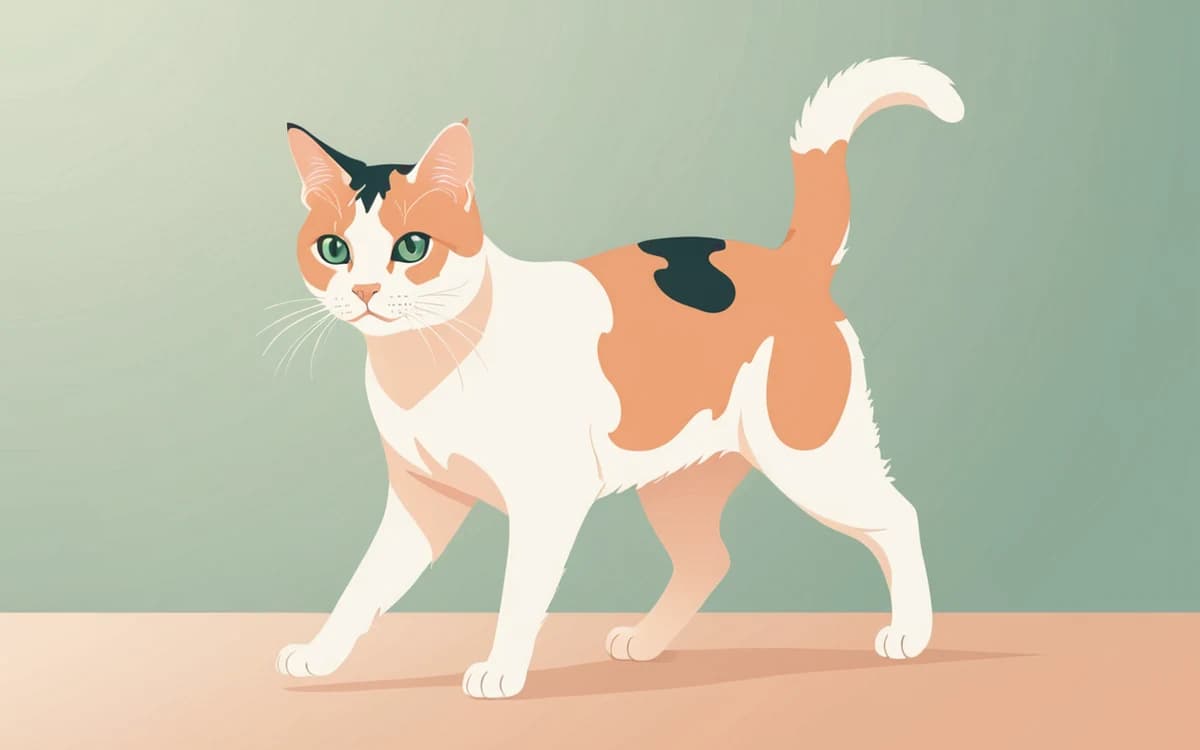
Cats can't tell you they're stressed, but their ears, tail, eyes, posture, and whiskers do the talking. Learning to read these signals — and the situation they show up in — lets you catch tension early, before it turns into hiding, spraying, or a vet visit. No single signal tells the whole story; the combination does.
Quick checklist:
- Ears turned sideways or pinned flat back signal alertness, irritation, or fear
- A puffed tail or one wrapped tightly around the body points to real fear
- Dilated pupils can mean stress or excitement — the situation tells you which
- A body crouched low and tense against the ground is a fear posture
- Read every signal in context and alongside the others, never alone
Why context matters more than any single signal
A cat's tail thumping the floor can mean two very different things depending on what's happening around it. During a play session, a few quick thumps often just mean excitement building before a pounce. During a vet exam or a tense moment with another cat, the same thumping usually means irritation that's about to escalate. Signs of stress in cats covers the fuller list of behavioral signals, but body language is what lets you catch a shift in real time, while it's happening, rather than after the fact. The rule of thumb: never read one signal in isolation. Check what else is going on — the ears, the tail, the eyes, and the situation around your cat — before deciding what she's telling you.
Ears: the first thing to check
Ears are often the fastest tell because cats move them constantly and involuntarily. Upright, forward-facing ears usually mean a relaxed or attentive cat — business as usual. Ears turned out to the side, sometimes called the "airplane" position, signal alertness or mild annoyance; your cat is tracking something and isn't fully comfortable with it. Ears flattened back against the head are a clearer warning: this is fear or defensive aggression, and the cat is telling you to back off or give space. The transition matters as much as the position itself — ears that go from upright to sideways in the middle of petting are an early cue to stop before things escalate to flattened ears or a swat.
Tail: your cat's mood barometer
The tail is one of the most expressive parts of a cat's body. Held high and straight, often with a slight curve or hook at the tip, it usually signals confidence and a friendly approach. Rapid thumping or lashing side to side is agitation — the more forceful the movement, the closer your cat is to reacting. A tail that puffs up (piloerection) reflects intense fear or a startle response, an attempt to look larger in the moment. A tail held low and wrapped tightly around the body, especially combined with a lowered head, usually points to anxiety or a cat trying to make herself smaller and less noticeable. As with ears, watch the transition: a tail that goes from a loose, relaxed sway to stiff, rapid flicking is often the clearest early warning you'll get.
Eyes: pupils and the slow blink
Pupil size changes fast in cats, which makes it a useful but sometimes ambiguous signal. Dilated pupils can mean your cat is stressed or afraid, but they can just as easily mean she's excited during play or reacting to sudden low light — pupil size alone doesn't tell you which. Look at what else is happening: dilated pupils paired with a crouched body and flattened ears point to fear; dilated pupils during a play session with a raised, twitching tail point to excitement. A slow blink, on the other hand, is a more reliable signal on its own — cats use it as a sign of trust and comfort, sometimes called a "cat kiss." A tense, unblinking stare usually means the opposite: your cat is on alert.
Whiskers: a subtle but reliable tell
Whiskers get less attention than ears or tail, but they're worth watching. Whiskers pushed forward, spread out and relaxed, usually signal curiosity or interest — your cat is investigating something new. Whiskers pulled back flat against the face, especially combined with pinned ears, are a stress signal: your cat is trying to protect a sensitive area and bracing for something unpleasant. Because whisker movement is subtle, it's most useful as a confirming signal alongside the ears and tail rather than something to read on its own.
Posture: reading the whole body
Individual signals matter, but overall posture often gives the clearest read. A cat crouched low to the ground, weight pulled in, tail tucked, and ears back is showing fear — she's trying to look small and avoid attention. This is often the posture that precedes hiding; see why cats hide for more on what typically follows it and when it's worth acting on. A very different defensive posture — the classic "Halloween cat" — is the body arched sideways, fur standing on end, tail puffed, often with an open-mouthed hiss. This isn't fear alone; it's a bluff meant to look bigger and end a confrontation without a fight. Relaxed posture, by contrast, is loose: a cat lying on her side or exposing her belly, with soft, half-closed eyes, is comfortable in her environment.
Body language at a glance
Use this table as a quick reference when you're not sure what a signal means on its own.
| Body part | Signal | Likely meaning |
|---|---|---|
| Ears | Upright, forward | Relaxed, attentive |
| Ears | Turned sideways ("airplane") | Alert, mildly annoyed |
| Ears | Flattened back | Fear, defensive aggression |
| Tail | High, straight, slight curve | Confident, friendly |
| Tail | Rapid thumping or lashing | Agitation, irritation |
| Tail | Puffed | Intense fear, startled |
| Tail | Low, wrapped tightly around body | Anxiety, trying to seem smaller |
| Eyes | Dilated pupils | Stress or excitement, depends on context |
| Eyes | Slow blink | Trust, comfort |
| Whiskers | Forward, relaxed | Curiosity, interest |
| Whiskers | Pulled back flat | Stress, bracing |
| Posture | Low, crouched, tucked in | Fear |
| Posture | Arched sideways, fur up | Defensive intimidation |
Reading body language in the moment tells you what's happening right now, but a single observation doesn't show you whether your cat's stress is getting better or worse over time. Calm Cat lets you log what you see — ears, tail, posture — against the situation it happened in, then see the pattern across weeks instead of relying on memory. See our guide to tracking cat stress and behavior for a simple system, app or no app.
Try calming music with Calm Cat
Free download — iOS & Android, 5 languages.


Signals that are easy to misread
A few common mix-ups are worth flagging. A cat rolling onto her back and exposing her belly is often read as an invitation for a belly rub — for most cats it's the opposite, a display of trust that isn't asking to be touched, and a hand reaching for it often gets swatted away. Purring is frequently taken as a pure sign of contentment, but cats also purr when anxious, in pain, or giving birth, so it's worth checking the rest of the body language before assuming a purring cat is happy. And a tail flick during a petting session isn't always affection winding down into irritation — sometimes it's simple overstimulation from too much repetitive touch in one spot, which resolves the moment you stop. Once you've spotted a stress signal, the next step is doing something about the trigger behind it; our guide to calming a stressed cat walks through what to change first.
When body language signals warrant a vet visit
Occasional stress signals — a flattened ear during a loud noise, a puffed tail when the vacuum comes out — are normal and usually resolve once the trigger passes. Persistent fear posture, a cat that stays crouched and withdrawn for days, or stress signals that appear alongside vomiting, appetite loss, or changes in litter box habits are different: those combinations can point to pain or illness rather than situational stress, and body language alone can't reliably tell them apart. Our guide on telling stress apart from illness covers the specific red flags. This article is meant to help you notice and describe what you're seeing — it isn't a substitute for a vet's assessment, especially if signals persist or come with any physical symptoms.
Frequently asked questions
Can body language alone tell me if my cat is sick? No — body language shows how your cat feels in the moment, but pain and illness can produce signals that look a lot like stress (crouching, ears back, avoiding touch). If signals persist beyond a normal trigger or come with physical symptoms like vomiting or appetite changes, treat it as a reason to see a vet rather than trying to diagnose it from posture alone.
Why does my cat's tail flick when I'm petting her and she seems happy? This is usually early overstimulation, not sudden anger. Watch for the tail flick to start slowing petting down or stopping before it escalates to a firmer thump or a nip — many cats give this warning a few seconds before they've had enough.
Is a cat showing its belly always a sign of trust? Generally yes — exposing the belly is a vulnerable position a stressed or fearful cat wouldn't choose. But it's not usually an invitation to touch it; most cats tense up or swat if you actually go for the belly, even when they were relaxed a second earlier.